Hiring a Licensed Roofing Contractor in Honolulu: A Homeowner's Guide
· R&C Roofing Contractors
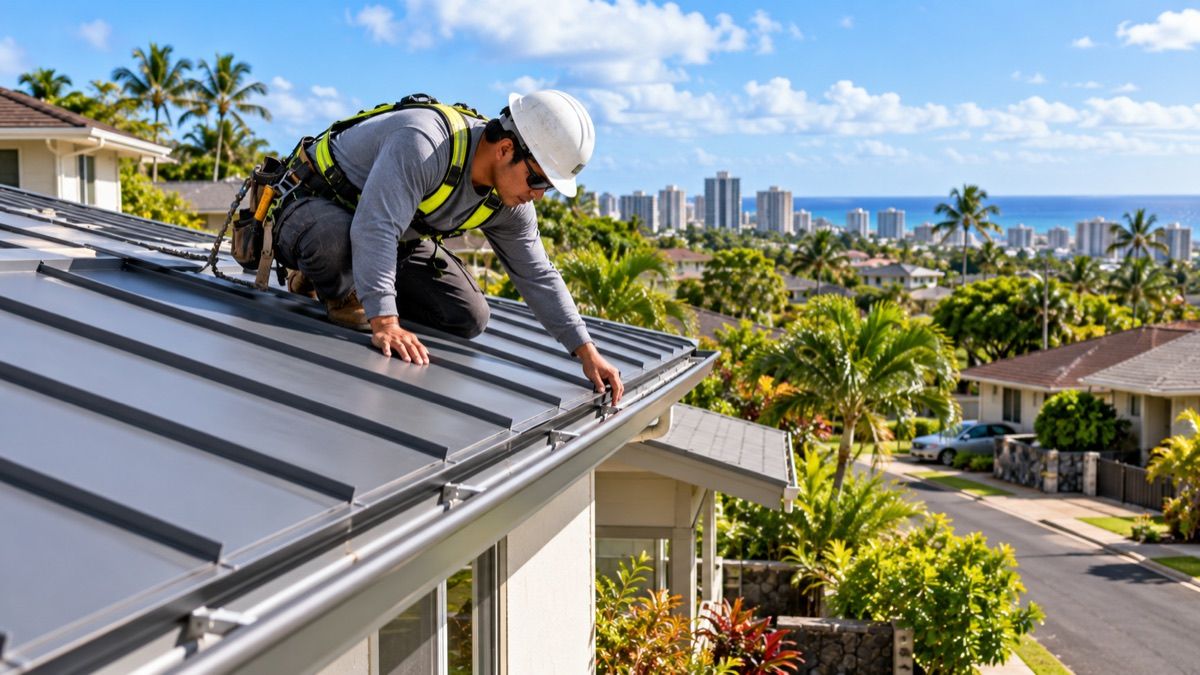
A water stain appears on your ceiling after heavy rain. A few shingles are missing after strong winds. Or perhaps your roof is getting older, and you're starting to collect estimates for replacement.
Finding someone willing to do the work is one thing. Finding a licensed roofing contractor in Honolulu who can evaluate the problem, explain your options, and provide a clear proposal is another.
Before hiring a roofer, it helps to understand what a Hawaii contractor's license means, how to verify credentials, and what should be included in an estimate. These details matter whether you need a small repair or a complete roof installation.
At R&C Roofing Contractors, we serve homeowners and commercial property owners throughout Oahu. Our approach begins with inspecting the existing roof so we can explain what the condition calls for before recommending major work.
This guide covers the practical checks worth making before you hire a roofing contractor.
Verifying a Roofing Contractor's Hawaii License
A roofing contractor's license is one of the first credentials to check before agreeing to construction work.
In Hawaii, contractor licensing is administered through the Department of Commerce and Consumer Affairs (DCCA). The state maintains a public license search where consumers can review contractor information.
You can check a contractor through the Hawaii DCCA Professional and Vocational Licensing website.
When reviewing a roofing contractor's credentials, pay attention to:
- License identification: Confirm that the number belongs to the business you're considering.
- License status: Check whether the license is current and in good standing.
- Classification: Confirm that the contractor holds a classification appropriate for the proposed roofing work.
- Business identity: Make sure the name on the estimate or contract matches the licensed entity.
- Disciplinary information: Review any relevant public records available through the state.
R&C Roofing Contractors operates under Hawaii contractor license CT-33642, with a C-42 roofing classification.
Licensing is an important starting point, but it is not a guarantee that every contractor will deliver the same workmanship, communication, or project experience. You should still evaluate the proposed work and contract carefully.
Roofing Credentials Beyond the State License
Licensing establishes a contractor's authorization to perform work within the applicable classification. Other qualifications can provide additional context about how a roofing company evaluates damage and approaches projects.
HAAG Certified Roof Inspection Expertise
Roof inspections are particularly important when the extent or cause of damage is unclear.
Robert Pilato, our HAAG Certified roof inspector (Certification #201408313), has specialized training in roof damage assessment.
This expertise can be useful when evaluating conditions following severe weather or distinguishing visible damage patterns from ordinary deterioration.
HAAG certification is an individual credential. It does not mean every member of a roofing crew holds the same certification.
Experience With Oahu Roofing Conditions
A contractor should understand how the property's environment affects its roofing system.
On Oahu, coastal exposure can contribute to corrosion of susceptible metal components. Wind-driven rain can expose weaknesses around flashing and roof penetrations. Strong sunlight can also contribute to the deterioration of certain roofing materials over time.
Different roof designs and materials respond to these conditions differently.
Our crew brings more than 50 years of combined roofing experience, working across residential and commercial roofing applications.
When speaking with any contractor, ask about experience with the specific roofing system on your property rather than relying on years of experience alone.
Insurance and Project Documentation
Before hiring a roofing contractor, request information about applicable liability insurance and workers' compensation coverage.
You should also understand who is responsible for permitting, inspections required by the applicable authorities, and documenting the completed scope.
These details should be clarified before work begins, not after a disagreement arises.
Matching the Roofing Service to Your Property's Needs
Not every roof problem calls for the same service. A contractor should evaluate the existing conditions before determining whether repair, restoration, or replacement is appropriate.
| Roofing service | Typical situation | Main consideration |
|---|---|---|
| Roof inspection | A leak, storm damage, or uncertainty about roof condition | Identify visible problems and possible causes |
| Roof repair | Localized damage with surrounding materials still serviceable | Address the cause without unnecessary work |
| Roof replacement | Widespread deterioration or an existing system no longer suitable for repair | Evaluate the complete roofing assembly |
| New roof installation | New construction or a planned roofing project | Match the system to the design and project requirements |
| Gutter installation or repair | Damaged gutters or inadequate roof-edge drainage | Direct rainwater away from vulnerable building areas |
At R&C Roofing, we provide these services for appropriate residential and commercial projects on Oahu.
Our roofing work includes systems such as asphalt shingles, metal roofing, modified bitumen, and silicone roof coatings for suitable applications.
The correct recommendation depends on the building, the existing roofing system, and the condition found during inspection.
For more detail about our available work, explore our residential roofing services.
Evaluating a Roofing Estimate Before Signing
Two roofing estimates can look similar at first glance while covering very different amounts of work.
One proposal might include replacing damaged flashing and underlayment. Another might address only the visible roofing material. Comparing their total prices without reviewing the scope can be misleading.
A useful roofing estimate should help you understand what you're paying for and which conditions could affect the project.
Scope of Work and Roofing Materials
Look for a description of the proposed repair or installation, including the areas being addressed and the materials to be used.
For replacement work, clarify whether the proposal includes removal of existing roofing, underlayment, flashing, roof-edge details, and disposal.
If the contractor recommends a particular material, ask why it is suitable for your roof's slope, exposure, and design.
Additional Work and Unforeseen Conditions
Some roof damage remains concealed until existing materials are removed.
For example, deteriorated decking may not be fully visible during an initial inspection.
Ask how the contractor will handle additional work if hidden damage is discovered. The agreement should explain how changes to the scope and price will be communicated and approved.
Permits, Warranties, and Payment Terms
Confirm which party will handle applicable permits and required inspections.
Review warranty terms in writing, including the distinction between manufacturer material coverage and contractor workmanship obligations.
Also examine the payment schedule, exclusions, and project conditions before signing.
A detailed proposal makes it easier to compare contractors and reduces uncertainty about what the agreed price includes.
Common Warning Signs When Hiring a Roofer
Price and availability are important, but certain practices deserve closer attention before you commit.
Be cautious when a contractor:
- Cannot provide a license number that matches the business offering the work.
- Recommends a full replacement without adequately evaluating the roof's condition.
- Provides a vague estimate that does not explain the proposed materials or work.
- Pressures you to sign immediately without giving you time to review the agreement.
- Promises that insurance will pay for a new roof before the insurer has determined coverage.
- Cannot explain how additional work, permits, or warranty obligations will be handled.
None of these concerns should be resolved by verbal assurances alone.
Ask for clarification and supporting documentation before authorizing the project.
A roofing contractor should be able to explain the reason for the recommendation in terms you can understand.
Understanding Roofing Costs in Honolulu
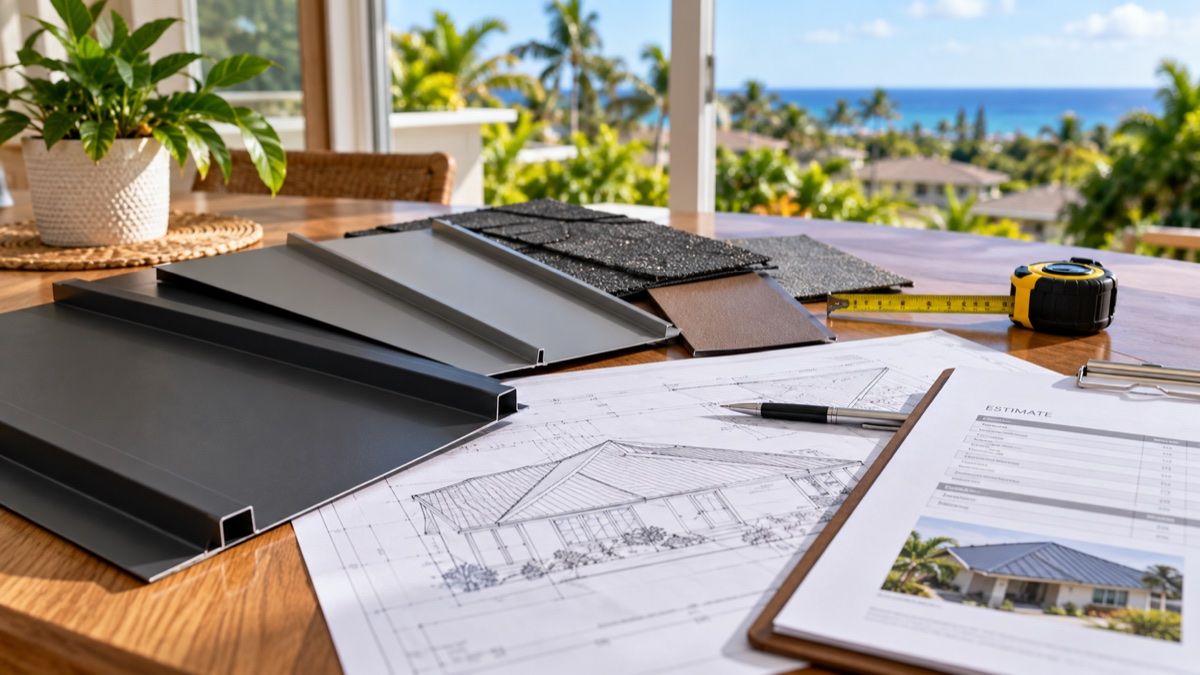
Roofing costs in Honolulu depend on more than the square footage of the roof.
The type of roofing system, existing damage, accessibility, and amount of preparation work all influence the estimate.
For example, replacing a small section of damaged shingles is a different scope from removing an entire roofing assembly and installing a new system.
Other factors may include:
- Roof pitch, shape, and complexity
- Material selection and availability
- Existing underlayment and decking conditions
- Tear-off and disposal requirements
- Flashing, penetrations, and drainage details
- Site access and applicable permitting requirements
Island material transportation and project logistics can also affect costs.
A generic online price range may provide broad context, but it cannot establish what your particular roof needs.
A free inspection and estimate can help establish a project-specific price for the visible and proposed scope. Concealed damage may still require additional work once roofing materials are opened.
We do not recommend using a fixed percentage of roof damage as an automatic rule for replacement. The decision depends on the roof's condition, repair feasibility, and applicable project requirements.
For a closer look at that decision, read our article Repair or Replace? Why the First Answer Should Not Be a New Roof.
The Roofing Inspection and Project Planning Process
When you contact us, you do not need to know which roofing service your property requires.
You can start by describing the problem, whether that's a ceiling leak, visible storm damage, or concern about an aging roof.
Our process begins with evaluating the existing condition.
Initial Inspection
We inspect accessible roofing areas and look for visible deterioration, damaged materials, and conditions that may be contributing to the reported problem.
The findings help us determine whether the concern appears localized or requires broader evaluation.
Findings and Recommended Scope
We explain what we observed and discuss the work that may be appropriate.
For some properties, that means a targeted repair. For others, restoration or replacement may deserve consideration.
Our inspections and estimates are free. If you need a formal written inspection report, we explain the separate fee before preparing it.
Estimate and Project Coordination
If roofing work is recommended, we prepare an estimate based on the proposed scope.
Once a project is approved, the work must be planned around the roof's condition, materials, access requirements, and other applicable project considerations.
For commercial or multi-unit properties, coordination may also involve property managers, occupants, or other contractors.
Roofing Insurance Claims and Storm Damage
Storm damage can create uncertainty about what repairs are necessary and what an insurance policy may cover.
If your roof has visible damage following severe weather, document the condition from a safe location and contact your insurer according to your policy's requirements.
We can inspect the roofing damage and provide contractor-side information, including photographs and roofing estimates, to support the documentation process.
However, the property owner files the insurance claim directly with the insurer. We do not determine coverage, negotiate claim settlements, or guarantee approval.
A contractor's assessment helps explain the roofing condition. The insurer makes its own coverage decision.
For a more detailed discussion, see our guide to storm damage versus normal roof wear.
Choosing a Roofing Contractor With Confidence
Hiring a licensed roofing contractor is about more than finding someone nearby.
The contractor should hold the appropriate license, understand your roofing system, provide a clear estimate, and explain the work being recommended.
You should also feel comfortable asking questions about materials, project responsibilities, and conditions that could change the scope.
At R&C Roofing, our goal is to help you understand your roof's condition before you commit to construction work.
We're based in Honolulu and serve residential and commercial properties throughout Oahu.
If you've noticed a leak, damaged roofing materials, or signs that your roof may need attention, we're available to evaluate the condition and discuss the next step.
Contact R&C Roofing Contractors or call (808) 888-2524 to request a free roof inspection and estimate.
Our regular business hours are Monday through Friday, 8:00 a.m. to 4:30 p.m. Our website also offers after-hours online chat, although this does not guarantee immediate emergency dispatch.
R&C Roofing Contractors | Hawaii Contractor License CT-33642