Solving Standing Water Issues on Low-Slope Commercial Roofs
· R&C Roofing Contractors
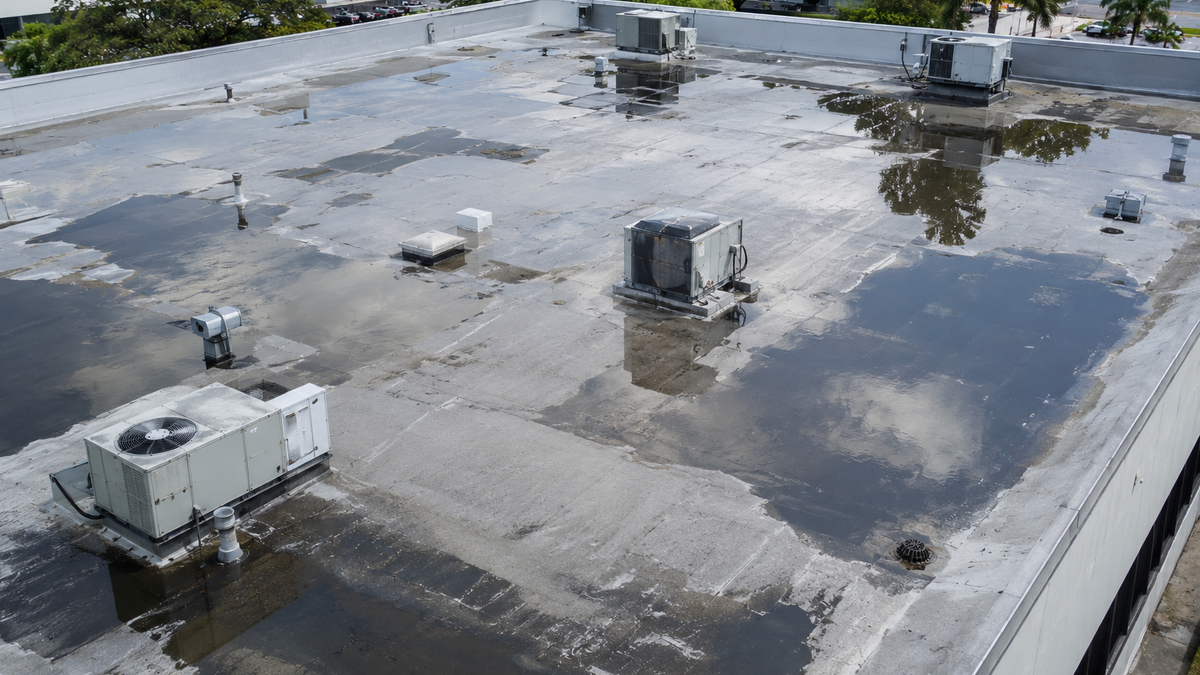
Low-slope and flat commercial roofs are common on Oahu office buildings, retail centers, warehouses, and multi-family structures. These roofs rely on carefully engineered drainage rather than steep pitch to move water off the surface. When drainage paths are blocked, undersized, or poorly designed, water collects in ponds that can remain for days after rain.
Standing water accelerates membrane wear, increases the risk of leaks, and adds significant weight to the structural deck. Over time, repeated ponding can contribute to structural fatigue and higher long-term maintenance costs. This guide explains the primary causes of ponding on commercial roofs and the practical solutions that restore positive drainage under Oahu conditions.
Why Ponding Occurs on Low-Slope Roofs
Low-slope roofs are designed with a slight pitch, typically between one-quarter inch and one-half inch per foot, to encourage water movement toward drains, scuppers, or gutters. Several factors can interrupt that movement:
- Settling or deflection of the structural deck that creates low spots
- Insufficient or uneven insulation that fails to maintain the designed slope
- Clogged or undersized drains and scuppers
- Debris accumulation that blocks flow paths
- Improper original design that does not account for local rainfall intensity
Oahu’s heavy rainfall events, especially on the windward side and during Kona storms, deliver large volumes of water in short periods. Roofs that cannot clear that volume quickly develop temporary or persistent ponds.
The Role of Tapered Insulation Systems
One of the most effective ways to correct ponding is the installation of a tapered insulation system. Rather than a uniform thickness of insulation, tapered boards are cut and arranged to create a continuous slope toward the drainage points. The system restores positive drainage without requiring major structural changes to the deck.
Tapered insulation offers several advantages:
- It re-establishes the designed pitch even when the underlying deck has settled.
- It improves thermal performance by adding insulation value while solving the drainage problem.
- It can be integrated with a new membrane system during a re-roof project.
- It reduces the volume of water that remains on the roof after each rain event.
Proper design of the taper layout is essential. The system must direct water to existing or newly located drains and scuppers without creating new low spots. A professional evaluation of the current roof surface and structural conditions determines whether a tapered system is the appropriate solution.
Scupper and Drain Maintenance
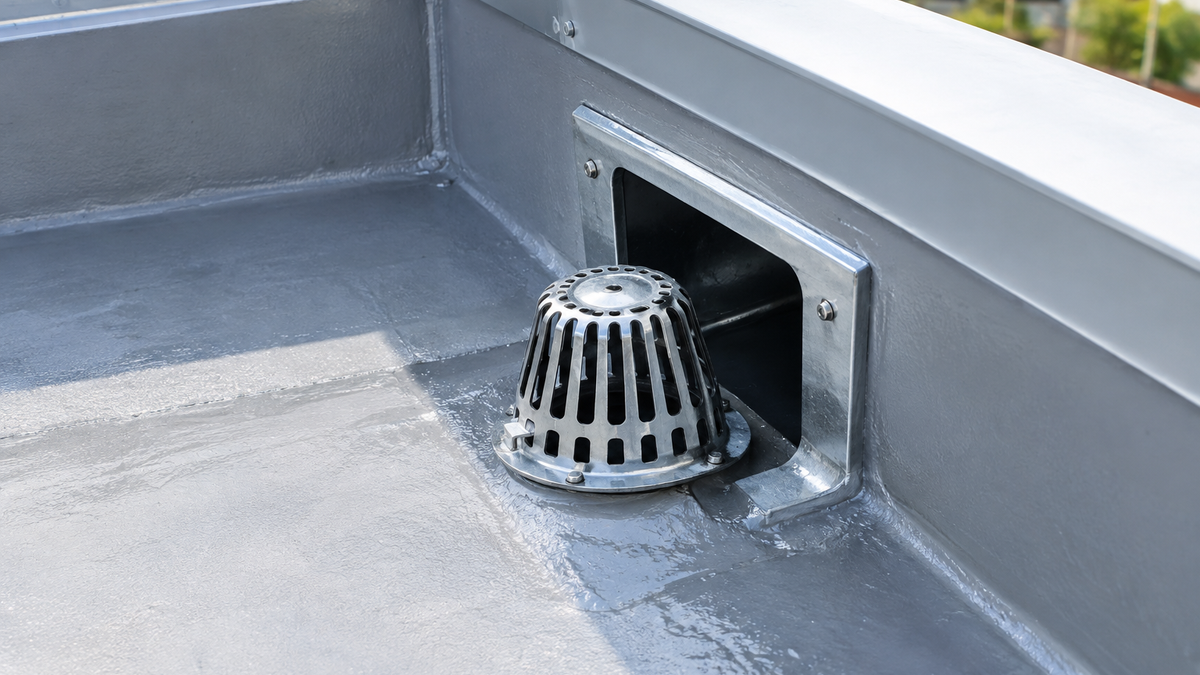
Scuppers are openings in the parapet wall that allow water to exit the roof perimeter. Internal drains collect water at low points and carry it through the building’s plumbing system. Both require regular attention.
Common issues include:
- Leaves, dirt, and debris that accumulate at the openings and restrict flow
- Damaged or missing strainers that allow larger objects to enter and clog the system
- Corroded or deteriorated metal components, especially in coastal salt-air environments
- Undersized openings that cannot handle peak rainfall volumes
Routine clearing of scuppers and drains is a basic maintenance task that prevents many ponding problems. When the existing drainage capacity is inadequate for the roof area and local rainfall intensity, redesign or addition of drainage points may be required.
Structural Implications of Prolonged Ponding
Water weighs approximately 62 pounds per cubic foot. A pond only one inch deep across a large roof area adds substantial load. Repeated cycles of ponding and drying can stress the structural deck and supporting members. In extreme cases, deflection increases and creates even larger low spots, compounding the original drainage problem.
Membrane systems also suffer. Constant immersion accelerates aging of the waterproof layer, weakens seams, and increases the likelihood of punctures or tears. Addressing ponding early protects both the waterproofing and the structure beneath it.
Evaluation and Documentation
A thorough commercial roof inspection measures existing slopes, identifies low spots, assesses the condition of drains and scuppers, and evaluates the membrane and insulation. Photographic documentation and, when useful, moisture scanning provide a clear picture of the current performance.
R&C Roofing conducts these evaluations for commercial properties and association boards across Oahu. Robert Pilato, HAAG Certified Inspector (Certification #201408313), documents visible conditions and explains the findings in practical terms. The company operates under Hawaii Contractor License C-33642 and can move from inspection to repair or full re-roof when the scope is appropriate.
If weather-related damage is part of the concern, R&C provides contractor-side documentation of visible conditions. The company does not act as a public adjuster or guarantee claim outcomes. Details appear on the claims support page.
Inspections and estimates are free. Written reports for property management records or insurance purposes are available at a quoted fee.
Relevant Services for Commercial Property Managers
R&C Roofing supports commercial and multi-family properties with solutions matched to the documented condition of the roof:
- Roof inspections that assess drainage performance, membrane condition, and structural indicators
- Targeted roof repair of clogged scuppers, damaged drains, or localized membrane issues when the overall system remains viable
- Full commercial roof replacement that incorporates tapered insulation and properly sized drainage when ponding cannot be corrected by maintenance alone
- Coordination of material selection and detailing suited to Oahu’s rainfall intensity and coastal exposure
Recommendations are driven by the actual performance of the roof rather than a predetermined product list.
Practical Comparison of Drainage Solutions
| Condition | Primary Cause | Typical Solution |
|---|---|---|
| Localized ponding near drains | Debris blockage or undersized openings | Clear and maintain scuppers and drains; verify capacity |
| Widespread low spots | Deck settlement or insufficient original slope | Install tapered insulation system during re-roof |
| Persistent ponds after moderate rain | Combination of slope loss and restricted drainage | Combined approach of tapered insulation and drainage upgrades |
| Accelerated membrane wear | Repeated immersion | Correct drainage first, then address membrane condition |
Frequently Asked Questions
Is some ponding after heavy rain normal?
Brief standing water that clears within 24 to 48 hours is sometimes tolerated by membrane manufacturers. Ponds that remain longer or reappear after every rain indicate a drainage deficiency that should be addressed.
Can tapered insulation be installed without a full re-roof?
In most cases a tapered system is installed as part of a new membrane assembly. Partial applications are possible in limited areas, but a complete system usually provides the most reliable long-term result.
How often should commercial roof drains and scuppers be cleaned?
At least twice a year is a practical minimum, with additional checks after major storms or during periods of heavy leaf fall. Coastal properties may require more frequent attention due to wind-blown debris and salt accumulation.
Does ponding void a roof warranty?
Many membrane warranties exclude damage caused by prolonged ponding if the drainage system was not properly maintained or designed. Correcting the drainage issue protects both the roof and any remaining warranty coverage.
What is the first step for a property manager dealing with standing water?
Schedule a professional inspection that documents the current slopes, drainage components, and membrane condition. The findings provide the basis for prioritizing maintenance, repair, or system replacement.
Restore Positive Drainage and Protect the Asset
Standing water on a low-slope commercial roof is both a maintenance burden and a structural concern. Tapered insulation systems restore the designed slope, while consistent scupper and drain maintenance keeps the flow paths open. Together these measures reduce the volume and duration of ponding and extend the service life of the roof assembly.
R&C Roofing evaluates commercial roofs with HAAG Certified expertise and practical knowledge of Oahu’s rainfall patterns and coastal conditions. The process begins with a free inspection and estimate so property managers understand the actual performance of the current system and the practical options available.
Call (808) 888-2524 or schedule through the website. Clear documentation of drainage conditions supports decisions that protect the building and control long-term costs.