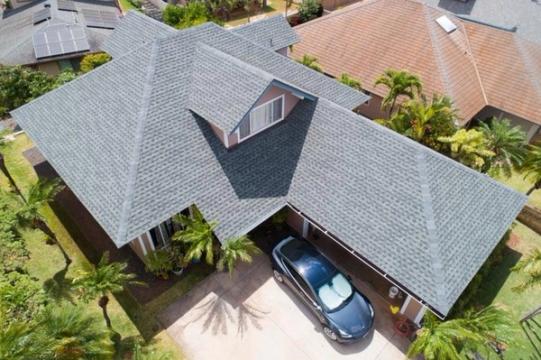
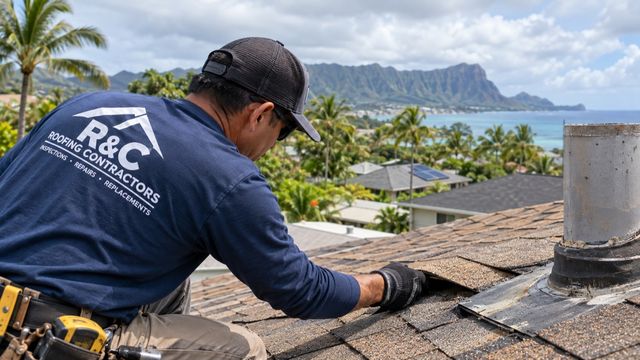
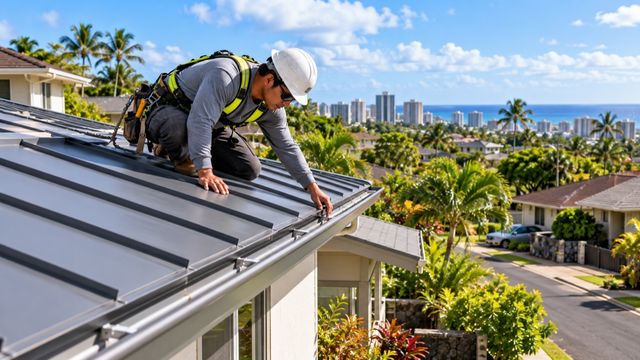
Residential Roof Installation in Honolulu: What Homeowners Should Know
· R&C Roofing Contractors
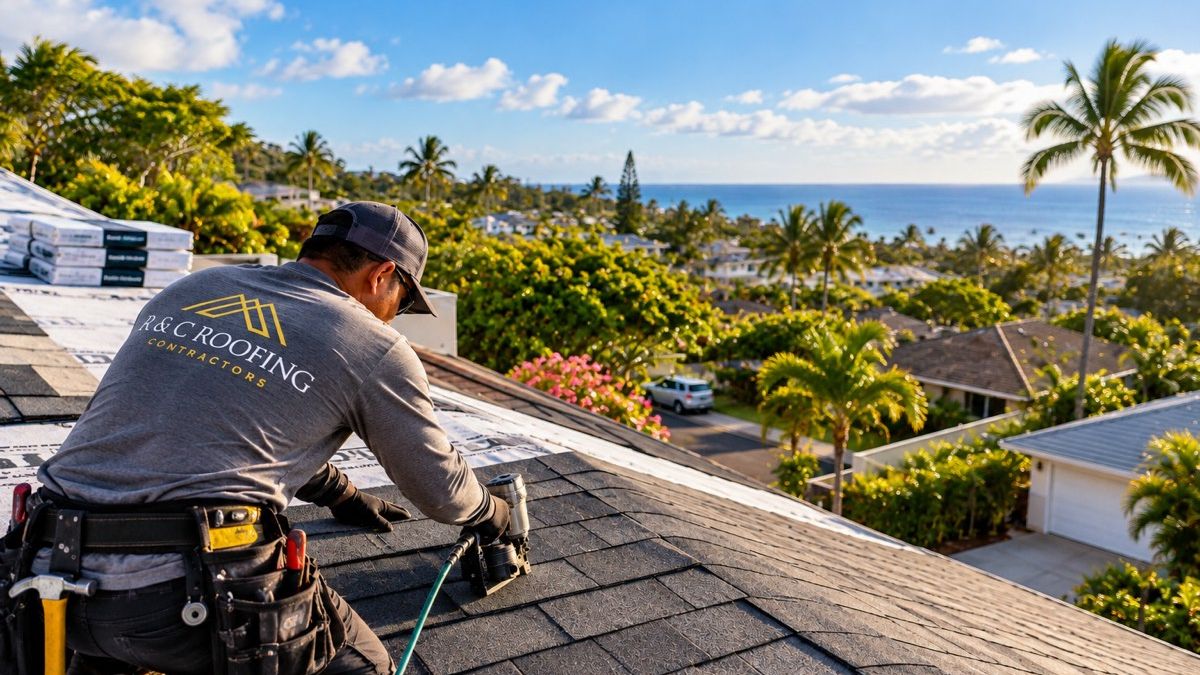
A new roof is a major investment, especially in Honolulu, where strong sunlight, coastal salt air, and heavy rainfall can affect how roofing materials perform over time. If you're searching for a residential roofing installation near you, the first decision isn't necessarily which roofing material to buy. It's whether your existing roof actually needs replacing.
At R&C Roofing Contractors, we inspect the roof before recommending the work. Sometimes a full replacement makes sense. Other times, a targeted repair can address the problem while the surrounding roof remains serviceable.
We provide residential roof inspections, repairs, replacements, and new installations throughout Oahu. Our team brings more than 50 years of combined crew experience, and our inspection-first approach helps homeowners understand what they're paying for before committing to a project.
We offer free roof inspections and estimates. If you need a formal written inspection report, we explain the additional fee before preparing it.
Call us at (808) 888-2524 to discuss your roof and arrange an inspection.
How Honolulu's Climate Affects Residential Roofs
Roofing materials in Hawaii face different conditions than those in many mainland locations. Honolulu homeowners need to consider not only the roofing surface but also the flashing, fasteners, underlayment, and drainage components that help keep water out.
Strong sunlight and UV exposure
Constant sun exposure gradually ages roofing materials. Asphalt shingles may lose protective granules, while exposed sealants and other components can become brittle as they weather.
Over time, this deterioration can make a roof more vulnerable to water intrusion, particularly where materials overlap or connect to roof penetrations.
Salt air and coastal corrosion
Homes near the ocean face additional challenges from airborne salt. Metal flashing, exposed fasteners, and roofing panels can corrode if their materials or protective finishes are not suitable for the environment.
Corrosion deserves attention because even a small failure around a roof penetration or flashing connection can allow water beneath the roofing surface.
When planning an installation near the coast, we consider the property's exposure when evaluating roofing materials and corrosion-resistant components.
Heavy rainfall and wind-driven water
Honolulu's rainfall patterns vary by neighborhood. A home near Manoa may experience different moisture conditions than a property closer to the coast.
During heavy rain, roof valleys and drainage systems must handle concentrated water flow. Wind-driven rain can also expose weaknesses around flashing, vents, and roof edges.
This is why residential roofing installation involves more than choosing attractive shingles. The complete roofing assembly needs to work together.
For a closer look at these differences, read our guide to how Oahu's microclimates affect roofing.
Repair or Replace? How We Evaluate Your Roof
One of the most important questions homeowners ask is whether replacing the entire roof is necessary.
We don't believe every leak should lead to a replacement estimate.
Our approach begins with evaluating the condition of the roofing system, identifying the likely cause of the problem, and explaining the available options.
| Roof condition | What we may recommend |
|---|---|
| Isolated flashing damage | Targeted repair when the surrounding roof is sound |
| A few missing shingles | Repair after checking adjacent materials and underlayment |
| Widespread curling or brittle shingles | Evaluate whether full replacement is more practical |
| Multiple leaks across different roof areas | Investigate broader system deterioration |
| Damaged or rotted roof decking | Determine the extent of removal and replacement needed |
| Older roof without active problems | Inspect its condition and consider continued maintenance |
Roof age matters, but it doesn't tell the whole story. Installation quality, previous maintenance, material condition, and environmental exposure all influence whether a roof remains serviceable.
We would rather tell you your roof has five good years left than sell you one you do not need.
If you're weighing these options, our article on when to repair or replace a roof explains the decision in more detail.
Choosing the Right Roofing Material for Your Honolulu Home
The right material depends on your roof's design, the property's exposure, and your budget.
Asphalt shingles are the roofing system we install most frequently. We also work with metal roofing and other systems where appropriate for the building.
Asphalt shingle roofing
Asphalt shingles are a common choice for sloped residential roofs. Architectural shingles provide a layered appearance and are available in different product configurations.
When evaluating shingles for an Oahu home, important considerations include wind-rating requirements, exposure to sunlight, underlayment, and installation details around roof edges and penetrations.
Shingle performance also depends on the specific product and installation conditions. Choosing a suitable shingle is only one part of building a reliable roof.
Metal roofing
Metal roofing may be worth considering for homeowners who prefer a different appearance or are evaluating long-term roofing options.
In coastal areas, the metal type, protective finish, and fasteners require particular attention. Not all metal roofing products respond to salt exposure in the same way.
We evaluate the property's location and roof design before discussing whether a metal system is appropriate.
Tile and other residential roofing options
Clay and concrete tile can be suitable for some homes, but the structure must be capable of supporting the selected system.
Other specialty roofing products may also be available depending on the project.
We don't recommend choosing a material based only on appearance or an advertised lifespan. Roof pitch, structural suitability, manufacturer requirements, and future maintenance all deserve consideration.
Residential roofing material comparison
| Material | Main considerations | What homeowners should evaluate |
|---|---|---|
| Asphalt shingles | Common for sloped roofs; different styles and product ratings | UV exposure, wind resistance, maintenance, cost |
| Metal roofing | Material and finish selection are important near the coast | Corrosion resistance, fasteners, installation details |
| Clay or concrete tile | Requires a structurally suitable roof | Weight, underlayment, replacement of damaged tiles |
| Specialty roofing systems | Suitability varies by product and roof design | Availability, compatibility, installation requirements |
There is no single roofing material that suits every Honolulu property.
For more information about the installation itself, visit our roof replacement and new installation service page.
What to Expect During a Residential Roof Installation
Understanding the installation process can help you prepare for the work and ask better questions before signing a contract.
Although the exact steps depend on your property, a complete roof replacement generally involves several important stages.
1. Initial roof inspection
We begin by discussing your concerns and examining the existing roof.
Our inspection considers the roofing materials, visible deterioration, flashing, drainage, and other accessible areas relevant to the problem.
If a ceiling leak or attic concern requires interior access, we ask that the homeowner be present.
The goal is to establish whether repair, replacement, or continued monitoring makes sense.
2. Review of findings and estimate
Once we've evaluated the roof, we explain what we found and discuss the appropriate scope of work.
For replacement projects, the estimate considers the roofing system, materials, and work required for the property.
We also discuss conditions that could affect the project, such as damaged decking or complicated roof penetrations.
The inspection and estimate are free. A formal written inspection report, if requested, carries an additional fee that we quote beforehand.
3. Material selection and project planning
If replacement is appropriate, we help you evaluate materials that suit the roof's structure and environmental exposure.
Planning may include reviewing roof access, material requirements, and the sequence of work.
We also manage the municipal permitting process for roof replacement projects.
4. Removal of existing roofing
For a full tear-off, the existing roofing materials are removed so the underlying assembly can be examined.
This stage is important because some problems are not visible until the old roofing has been taken off.
For example, damaged sheathing may need replacement before the new roofing system can be installed.
5. Installation of the new roofing assembly
A residential roof is made up of several components that work together.
Depending on the selected system, installation may include:
- Roof decking: Inspecting the sheathing and replacing damaged sections where necessary.
- Underlayment: Installing the secondary water-resistive layer beneath the finished roofing.
- Flashing: Detailing valleys, walls, vents, and other areas where water could enter.
- Fasteners: Selecting components appropriate for the roofing system and environmental exposure.
- Ventilation: Addressing ventilation requirements where applicable.
- Finished roofing: Installing the selected shingles, panels, or tiles according to applicable requirements.
Attention to these details matters because a roofing surface can appear complete while important water-management components remain hidden underneath.
6. Completion and review
Once the installation is complete, the finished work should be reviewed against the agreed scope.
Homeowners should understand what was installed, which areas were repaired, and what maintenance considerations apply to the new system.
Before work begins, it's also reasonable to ask about the proposed schedule, cleanup responsibilities, and applicable warranty documentation so expectations are clear.
How Much Does Residential Roof Installation Cost in Honolulu?
There is no single price that accurately represents every residential roofing project in Honolulu.
Two homes with similar floor plans can have different roofing costs because of roof pitch, accessibility, material selection, and the condition of the existing assembly.
The most useful estimate is one based on an actual inspection of your property.
Factors that affect roof installation pricing
| Cost factor | Why it matters |
|---|---|
| Roof size and pitch | Larger or steeper roofs generally require more materials and labor |
| Roofing material | Asphalt shingles, metal, and tile have different material and installation requirements |
| Roof complexity | Valleys, skylights, vents, and multiple roof sections require additional detailing |
| Existing roof removal | Removing old materials affects labor and disposal requirements |
| Decking condition | Damaged sheathing discovered during tear-off can increase the scope |
| Access and logistics | Equipment access, material handling, and site conditions affect project planning |
| Permitting | Applicable permits and requirements form part of the overall project scope |
Material transportation and availability can also influence roofing costs in Hawaii.
Why the lowest estimate isn't always the lowest overall cost
When comparing roofing estimates, look beyond the final price.
One proposal may include removal of the existing roofing, new underlayment, flashing replacement, and specific decking allowances. Another may describe those items differently or exclude certain work.
Ask each contractor to explain:
- What roofing materials and components are included?
- Will the existing roofing be removed?
- How will unexpected decking damage be handled?
- Are applicable permits included?
- What warranty terms apply to the proposed materials and workmanship?
- How will changes to the agreed scope be documented?
A clear scope makes estimates easier to compare and reduces uncertainty about what you're purchasing.
Does the 25% roof damage rule require replacement?
Homeowners sometimes hear that damage affecting 25% of a roof automatically requires complete replacement.
That should not be treated as a universal rule.
The required scope depends on applicable building requirements, the nature of the damage, and the work being proposed. Insurance coverage is a separate question governed by the homeowner's policy and the carrier's determination.
Rather than assuming a particular percentage requires replacement, we recommend evaluating the actual damage and confirming the requirements that apply to the property.
For information about contractor licensing, homeowners can also review the Hawaii Department of Commerce and Consumer Affairs' guidance on hiring a licensed contractor.
Why a Professional Roof Inspection Matters Before Installation
A roof inspection should help you understand the condition of the existing system, not simply produce a replacement quote.
At R&C Roofing, that distinction is central to how we work.
Our team has more than 50 years of combined crew experience, and Robert Pilato holds HAAG Certified roof inspector credential #201408313.
HAAG damage assessment training helps inspectors evaluate visible damage patterns and distinguish between deterioration associated with normal wear and conditions that may be associated with storm impact.
We use the findings to explain what is happening with your roof and what work, if any, should be considered.
What our roof inspections cover
Depending on the property's condition and the reason for the inspection, we may examine:
- Roofing material wear and visible damage
- Flashing and roof penetrations
- Areas affected by leaks or previous repairs
- Roof edges and drainage conditions
- Visible corrosion
- Signs of moisture intrusion
- Damage patterns following severe weather
We can document observed conditions with photographs and explain whether the issue appears localized or more widespread.
Our inspections and estimates are free. Written inspection reports for insurance, real estate, or other documentation needs are available for an additional fee, which we quote before preparing the report.
Learn more about our roof inspection services on Oahu.
Why Honolulu Homeowners Work With R&C Roofing
Choosing a roofing contractor involves more than comparing prices. You should be able to verify the contractor's credentials, understand the proposed work, and ask questions without feeling pressured into a decision.
A roofing contractor with verifiable credentials
We operate under Hawaii contractor license CT-33642, with a C-42 roofing classification.
You can check contractor licensing information through the Hawaii DCCA license search.
Our team also brings more than 50 years of combined crew experience working with roofing systems and construction conditions.
Inspection-first recommendations
We evaluate the roof before recommending replacement.
If a repair can safely address a localized problem while the surrounding roof remains serviceable, we'll explain that option.
This is especially important for homeowners who are unfamiliar with roofing work or who may be concerned about paying for construction they don't need.
People you can speak with
Rob and Chris are the people behind R&C Roofing.
Rob, Robert Pilato, is our HAAG Certified roof inspector and the Responsible Managing Employee associated with our roofing contractor license.
Our approach is straightforward: explain the roof's condition, provide an estimate based on the work required, and give homeowners the information they need to decide.
Residential roofing services across Oahu
We serve homeowners throughout Honolulu and other Oahu communities, including Kaimuki, Waikiki, Kailua, Kaneohe, Mililani, Pearl City, Kapolei, and Ewa Beach.
Along with new roof installations and replacements, we provide roof repairs and gutter installation and repair.
Our focus is on identifying the roofing problem first, then recommending a scope that fits the property's actual condition.
Questions to Ask Before Hiring a Residential Roofing Contractor
If you're comparing roofing companies near Honolulu, asking the right questions can help you make a more informed choice.
Is the contractor properly licensed?
Verify the license number and confirm that the contractor holds the appropriate classification for the work.
For R&C Roofing Contractors, our Hawaii contractor license is CT-33642.
Will the contractor inspect the roof before recommending replacement?
An inspection can help distinguish between isolated damage and widespread deterioration.
Ask what the contractor observed and why the recommended scope is appropriate.
Does the estimate explain what's included?
Look for clear information about materials, removal of existing roofing, flashing, underlayment, permitting, and how unexpected conditions will be handled.
Can the contractor explain material suitability for your property?
A roof near the coast may require different material considerations than one farther inland.
Ask about corrosion resistance, roof pitch requirements, and the manufacturer's installation specifications.
What should you expect during construction?
Discuss site access, noise, material storage, cleanup, and how the contractor will communicate if unexpected conditions are discovered.
These questions help establish expectations before the project begins.
Schedule a Free Residential Roof Inspection in Honolulu
If you're considering a residential roof installation, you don't have to decide on a complete replacement before speaking with us.
We can inspect your roof, explain what we find, and help you understand whether repair or replacement is the practical next step.
Our inspections and estimates are free, with a separately quoted fee only if you request a formal written report.
We serve homeowners throughout Oahu from our Honolulu location.
R&C Roofing Contractors Hawaii Contractor License: CT-33642 3302 Campbell Ave, Honolulu, HI 96815 Phone: (808) 888-2524 Hours: Monday to Friday, 8:00 a.m. to 4:30 p.m.
If you're contacting us outside business hours, you can leave a message through our website's online chat.