Managing Heavy Rain Runoff with Seamless Aluminum Gutters
· R&C Roofing Contractors
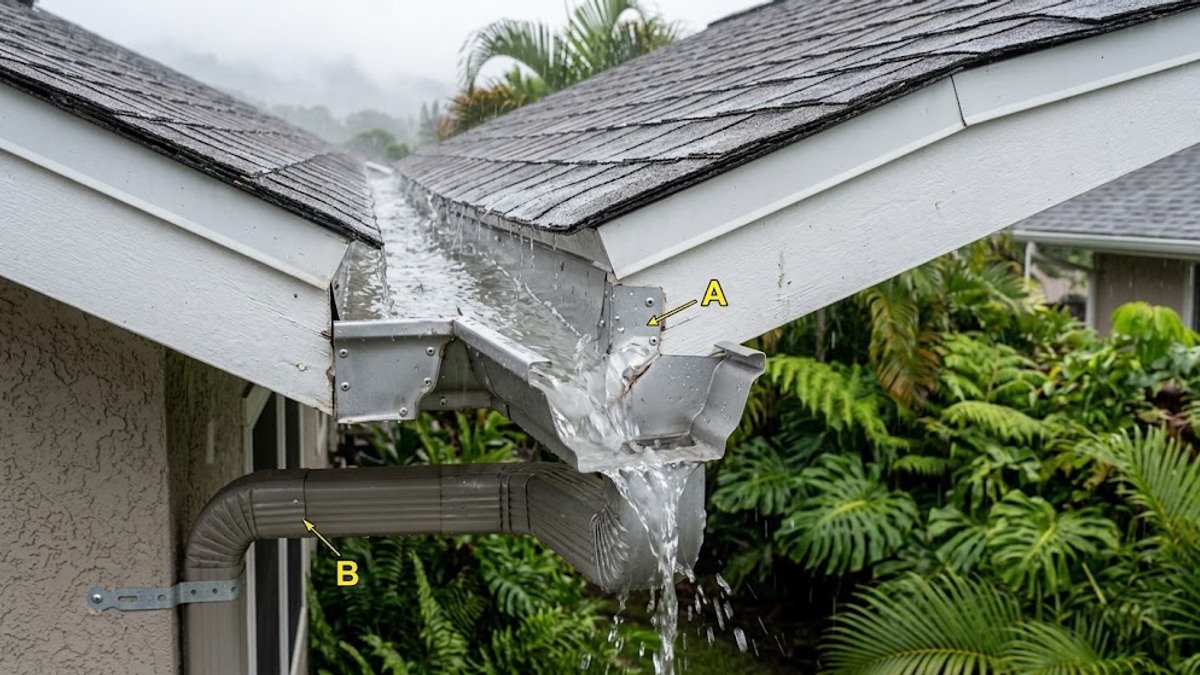
Heavy rain on Oahu does not simply fall and disappear. It collects on your roof, gains speed in valleys, and rushes toward the edges. Without a properly designed gutter system, that water overflows the eaves, saturates the soil around your foundation, erodes landscaping, and soaks siding and fascia. Over time, this repeated exposure creates conditions that lead to wood rot, soil settlement, and interior moisture problems.
Seamless aluminum gutters address this by creating a continuous channel that collects and directs runoff away from the house. The key is not just installing gutters. The key is sizing them correctly, placing downspouts where water actually concentrates, and setting the right pitch so water moves instead of standing.
Why Oahu Homes Need Reliable Gutter Systems
Oahu’s rainfall patterns vary sharply by location. Windward and valley areas receive frequent, intense showers. Leeward and coastal zones face periods of heavy downpours driven by Kona Lows or tropical systems. In both cases, the volume of water that leaves a typical residential roof in a short period can overwhelm undersized or poorly pitched gutters.
When gutters overflow or leak, the water does not stay at the perimeter. It saturates the soil next to the foundation, which can lead to settling or pressure against basement or crawlspace walls. It also runs down exterior walls, where it finds gaps in siding, windows, and doors. Proper drainage protects these areas by moving water several feet away from the structure.
Aluminum suits Hawaii conditions because it resists corrosion better than steel in salt-air environments and holds factory finishes under intense UV exposure. Seamless construction further reduces leak points by eliminating the joints common in sectional systems.
How Gutter Sizing, Pitch, and Downspout Placement Work Together
A gutter system fails when any one of these three elements is wrong. They must be calculated together for the specific roof.
Gutter Size
Most residential homes use 5-inch K-style gutters. Larger or steeper roofs, or roofs with multiple valleys that concentrate flow, often need 6-inch gutters. Size is determined by the roof area draining into each run, the roof pitch, and the expected rainfall intensity. A continuous seamless run that is too small for the volume will overflow no matter how well it is installed.
Pitch
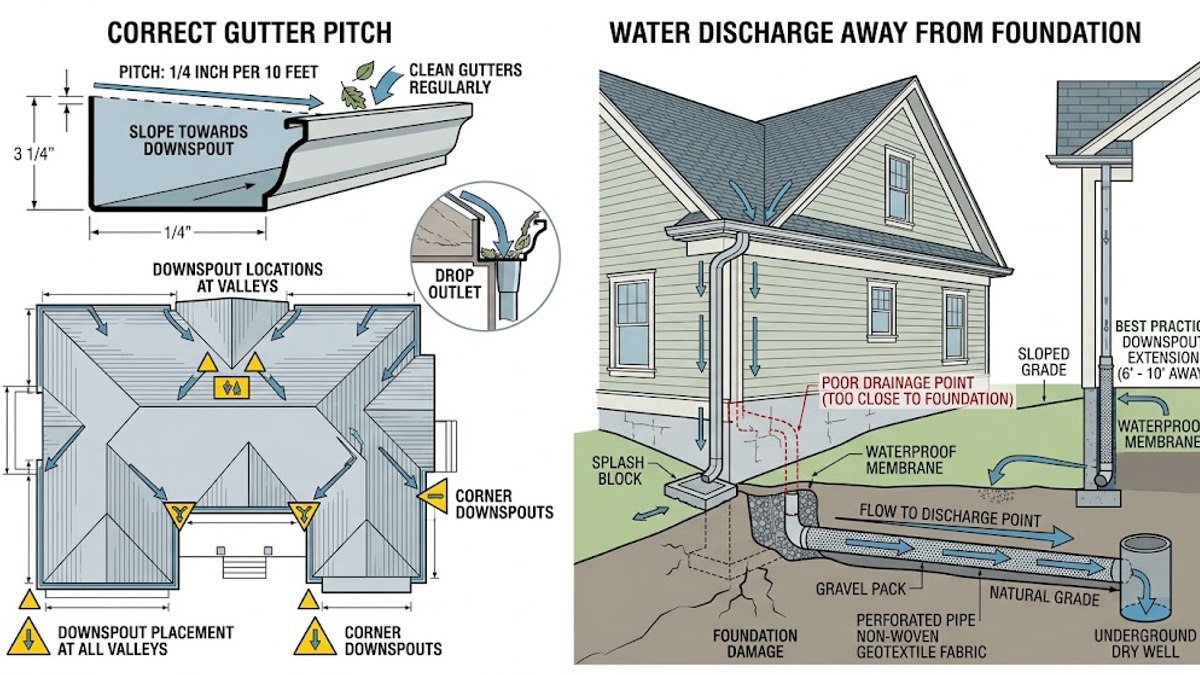
Gutters must slope gently toward each downspout. Industry practice commonly calls for approximately 1/4 inch of fall for every 10 feet of run, or a minimum continuous fall of about 1/16 inch per foot. A gutter that appears level to the eye often holds standing water. Standing water collects debris, accelerates corrosion at the bottom, and can overflow during the next heavy shower.
Downspout Placement and Capacity
Downspouts must sit where water naturally concentrates, especially at the bottom of valleys. Too few downspouts or undersized outlets create bottlenecks. A standard 2x3-inch downspout handles roughly 600 square feet of roof area under typical design conditions. Larger 3x4-inch downspouts handle more. The outlets must discharge water far enough from the foundation, ideally onto splash blocks or into extensions that move it several feet away from the structure and landscaping.
| Design Element | Common Residential Spec | Why It Matters on Oahu |
|---|---|---|
| Gutter size | 5-inch or 6-inch K-style | Matches roof area and valley flow so gutters do not overflow in intense showers |
| Pitch | ~1/4 inch fall per 10 feet | Keeps water moving so it does not stand and corrode the aluminum |
| Downspout size | 2x3-inch or 3x4-inch | Handles concentrated volume without creating backups at outlets |
| Outlet placement | At valley bottoms and low points | Captures the heaviest flow before it can spill over the eaves |
| Discharge distance | Several feet from foundation | Protects soil, landscaping, and siding from repeated saturation |
Common Problems We See on Oahu Properties
During inspections we regularly find the same issues:
- Gutters installed dead level, allowing water to stand and debris to accumulate.
- Too few downspouts for the roof area, especially on homes with complex hip or valley designs.
- Downspouts that empty too close to the foundation, creating permanent wet zones against the house.
- Sectional gutters with multiple joints that have separated or clogged over time.
- Undersized systems that overflow during the first heavy rain after installation.
These problems are often preventable with proper design at the start. When existing gutters show these conditions, targeted repair or full replacement with a correctly engineered seamless system solves the root cause rather than applying temporary patches.
How Seamless Aluminum Gutters Fit into a Complete Roofing System
Gutters are not an isolated add-on. They form the final edge of the roof drainage system. They work with the roof edge, drip edge, and fascia to keep water moving off the structure. When we evaluate a roof, we look at the entire path water takes, from the ridge through the valleys and out through the gutters.
Our gutter installation and repair services focus on custom seamless systems sized for the specific property. We form the gutters on site so each run matches the exact length and profile of the roof edge. This reduces joints and creates a cleaner, more reliable channel.
If the roof itself has active leaks, missing materials, or flashing failures, those issues need attention first. Gutters cannot compensate for a roof that is already allowing water into the structure. That is why we begin with an inspection. You can learn more about our diagnostic approach on our roof inspections page.
For properties involved in real estate transactions or insurance matters, documented findings about both the roof and the drainage system provide clear records. We supply contractor-side documentation of visible conditions. We do not negotiate settlements or act as public adjusters. Details on how we support the structural side of claims appear on our claims page.
Related Services That Support Long-Term Protection
Beyond gutters, we offer a full range of residential roofing services tailored to Oahu conditions. These include targeted roof repair when damage is localized, full roof replacement when the system has reached the end of its service life, and material guidance for asphalt, metal, stone-coated steel, and tile options suited to coastal salt air, windward moisture, or leeward UV exposure.
Every recommendation starts with the actual condition of the property rather than a predetermined sales outcome. We would rather confirm that a roof still has remaining life than recommend work that is not needed.
Frequently Asked Questions
Do seamless aluminum gutters work well near the ocean?
Yes. Aluminum resists corrosion in salt-air environments better than many alternatives. Proper gauge and finish selection further improve performance in coastal zones.
How often should gutters be cleaned on Oahu?
Frequency depends on nearby trees and debris load. Windward and valley properties with heavy vegetation typically need more frequent attention than open leeward lots. A well-designed system with correct pitch sheds debris more effectively than a poorly pitched one.
Can existing sectional gutters be converted to seamless?
In many cases the old system is removed and replaced with custom-formed seamless runs. The decision depends on the condition of the fascia, the existing pitch, and whether the current size matches the roof’s drainage needs.
Will new gutters solve foundation moisture problems?
Properly sized and pitched gutters with correct downspout discharge reduce the volume of water that reaches the foundation. They are one part of a broader moisture management approach that may also involve grading, landscaping, and drainage extensions.
Do you handle permits for gutter work?
Gutter installation is generally considered part of the exterior drainage system. We manage permitting requirements as needed for the specific project under our Hawaii Contractor License CT-33642.
Next Steps for Your Property
If you have noticed overflow during heavy rain, wet soil next to the foundation, staining on siding, or standing water in existing gutters, the next step is a clear evaluation of the current system. We inspect the roof and the drainage path, document what we find, and explain the options in plain language.
You do not need to decide on a full replacement before we look at the property. Many homes only need adjustments to pitch, additional downspouts, or a correctly sized seamless system.
Ready to stop water from saturating your foundation and siding?
Call R&C Roofing Contractors at (808) 888-2524 or schedule a free inspection and estimate through our contact page. We serve homeowners across Oahu, from windward valleys to leeward coasts. Inspections and estimates are free. Written reports for insurance or real estate purposes carry a separate fee that we quote in advance.